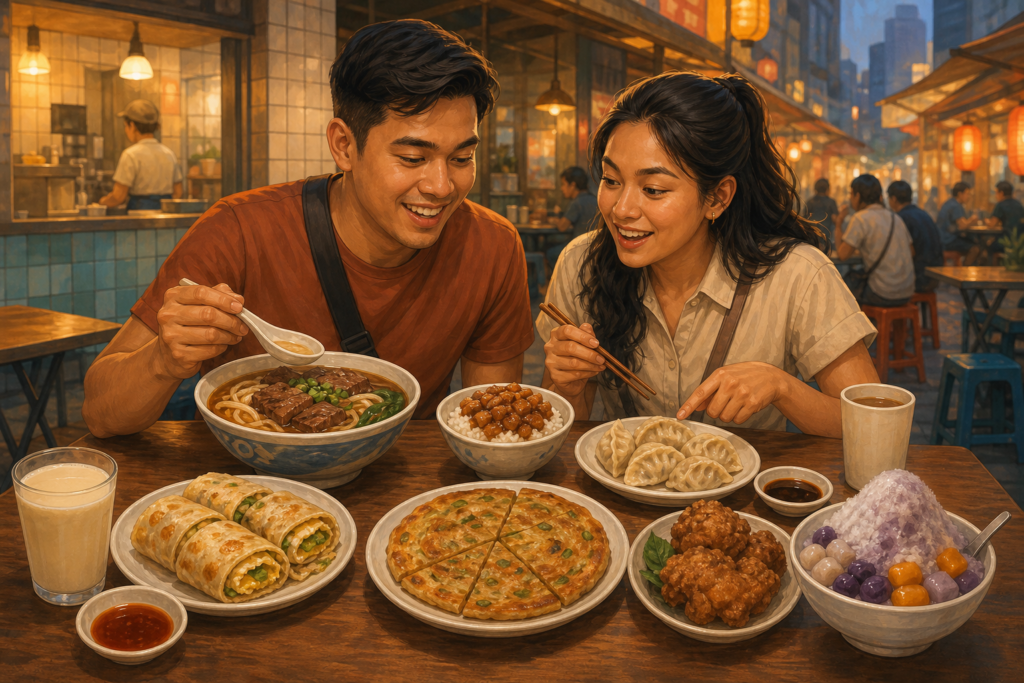
Quick answer: Build your first Taiwan food experience in four layers: one Taiwanese breakfast, one everyday rice or noodle meal, a few shared night-market snacks, and one tea or dessert stop. Taiwanese food is diverse and is often savory, brothy, soy-based or gently seasoned rather than automatically chile-hot. Order by picture, pointing or translation when needed, carry a cash backup, and ask about pork, seafood and allergens when they matter to you.
Official information checked on August 14, 2026. This guide uses current Taiwan Tourism Administration, Taipei City, New Taipei City and Taiwan Food and Drug Administration sources. It deliberately avoids fragile restaurant rankings, permanent menus, opening hours and price tables. Check any specific restaurant on the day you plan to visit.
What Taiwanese food is actually like
Taiwan food is not one flavor and it is not only night-market food. The official tourism material reflects a mix of Taiwanese regional cooking, Chinese culinary traditions, Indigenous and Hakka food, Japanese influence, modern cafés, international restaurants and an everyday snack culture. A first trip can move from soy milk and egg crepes in the morning to rice, noodles, dumplings or soup at lunch, then shared street snacks after dark.
- Flavor: expect soy sauce, fried shallot, scallion, garlic, pickled vegetables, broths and braised dishes. Individual shops and regions vary.
- Spice: many everyday dishes are not chile-hot by default. Chili sauce may be optional, while some stalls and hot-pot broths are genuinely spicy.
- Texture: crisp, chewy, soft, gelatinous and soupy textures often share the same meal. Texture can be as important as seasoning.
- Eating style: a quick bowl, a lunchbox-style meal, shared hot pot, tea and dessert, and street snacks are different experiences. Do not expect one venue to explain all of Taiwan food.
- Tourist food versus everyday food: bubble tea and night-market snacks are real parts of the picture, but so are simple breakfasts, rice bowls, noodles, dumplings, soups and convenience-store stops.
13 food experiences worth understanding first
This is a decision list, not a challenge. Choose the experiences that fit your route, appetite and dietary needs; you do not need to finish all 13.
| Food experience | What it is and feels like | Why try it first | Where it fits | Useful caution |
|---|---|---|---|---|
| Taiwanese breakfast: danbing + soy milk | Egg rolled with a thin wheat crepe; soy milk may be hot, cold, sweetened or unsweetened. | An easy introduction to a real morning routine, with familiar egg and bread-like elements. | Breakfast near your accommodation or first MRT stop. | Fillings and sauces vary; soy, egg and gluten matter for allergies. |
| Beef noodle soup | Wheat noodles, beef and broth ranging from clear to deeply braised. | A satisfying full meal that shows Taiwan’s soup-and-noodle comfort-food side. | Lunch or dinner. | Broth richness, spice and beef cuts vary; not suitable for beef avoidance. |
| Braised pork rice | Rice topped with chopped or minced braised pork and savory-sweet sauce. | Small, comforting and easy to pair with vegetables, tofu or soup. | Everyday lunch, dinner or a shared tasting portion. | Often fatty and pork-based; recipes may use different cuts. |
| Dumplings and xiaolongbao | Boiled or pan-fried dumplings are different from thin-skinned soup dumplings. | Useful for sharing and comparing wrapper, filling and cooking styles. | Casual meal or shared table. | Xiaolongbao contains hot broth; fillings commonly include pork and may include seafood. |
| Scallion pancake | Layered pan-fried flatbread with scallion; crisp outside and chewy inside. | A simple portable savory snack with a familiar bread-like format. | Breakfast, afternoon snack or night market. | Grease level and add-ons vary; contains gluten and may be cooked near other foods. |
| Taiwanese fried chicken | Chicken chop or smaller popcorn-style pieces, usually crisp and strongly seasoned. | Familiar fried-chicken comfort with Taiwanese pepper, basil or seasoning choices. | Night market or casual snack stop. | Portions can be large; spice, bones and cross-contact vary. |
| Gua bao | Soft steamed bun commonly filled with braised pork, pickled greens, peanut powder and herbs. | A compact contrast of soft, rich, salty, sweet and pickled textures. | Snack or part of a shared night-market round. | Usually pork; peanut and cilantro should be checked. |
| Hot pot | Broth at the table with meat, seafood, tofu, vegetables and noodles cooked to order. | Good for a group, cool or rainy weather and a slower shared dinner. | Dinner. | Broths, sauces, shared utensils and minimum orders vary; restrictions need advance checking. |
| Oyster omelet | Oysters, egg and a starch-thickened base, often finished with sauce. | Shows the softer, slightly chewy texture common in some Taiwanese snacks. | Night market or traditional snack shop. | Contains shellfish and egg; texture may surprise a first-timer. |
| Stinky tofu | Fermented tofu, commonly fried until crisp outside and soft inside, often served with pickled cabbage. | A distinctive aroma-and-texture experience if you are curious. | Night market or snack shop. | It is optional, not a courage test; fermentation, frying oil and toppings vary. |
| Shaved ice and taro-ball dessert | Ice or sweet soup with chewy taro and sweet-potato balls, beans, fruit or other toppings. | Cooling, shareable and a good way to explore Taiwan’s chewy dessert textures. | Afternoon or after dinner; taro balls fit naturally into a Jiufen day trip. | Toppings and sweetness vary; ask about dairy, nuts and serving size. |
| Taiwan tea and bubble tea | Tea culture ranges from brewed local tea to milk tea with chewy tapioca pearls. | Lets you compare aroma, sweetness and texture instead of treating one branded drink as the whole category. | Afternoon break, café or walking drink. | Choose sugar and ice when offered; caffeine, dairy and large pearls may matter. |
| Pineapple cake | Crumbly pastry with a sweet fruit filling; recipes may use pineapple alone or a blended filling. | A practical tea snack and souvenir category rather than another full meal. | Tea break or departure-day shopping. | Check ingredients, expiry and baggage rules; no brand is universally best. |
How Taiwanese breakfast works
Taipei City’s official food material shows how broad breakfast can be: danbing, soy milk, shaobing baked rolls, youtiao fried dough, sticky-rice rolls, congee, noodles, eggs, sandwiches and other quick combinations. Some breakfast shops focus on a counter and griddle; other traditional vendors specialize in one or two items. Hours and ordering systems are business-specific.
- Easiest first order: danbing plus soy milk gives you egg, wheat and a drink without committing to a heavy meal.
- More filling: a sticky-rice roll, congee with side dishes or noodles can carry you further into the day.
- Sweet or savory soy milk: do not assume every bowl or cup is sweet. Point to the menu photo and confirm when the distinction matters.
- Route rule: choose breakfast close to your hotel or first destination. Crossing Taipei for one viral shop wastes the best early sightseeing window.
Everyday lunch and dinner: rice, noodles, dumplings and soup
For an ordinary meal, start with a base—rice, noodles, dumplings or soup—then add one vegetable, tofu, egg or small side if needed. Braised pork rice, beef noodles and dumplings are useful first choices because each can be a complete decision instead of a long tasting project. Lunchbox-style meals and food courts are practical when a group wants different dishes in one place.
KAI TAIWAN LOCAL CONTEXT: The useful local distinction is everyday food versus destination food. A simple rice bowl or noodle shop can be more representative of a normal Taiwan day than chasing five famous stalls. Build meals into the district you already planned and save a special cross-city food trip for a future specialist guide.
A first-timer night-market strategy
Taiwan’s official tourism material treats night markets as places where many snack traditions gather; it does not mean every stall is famous, exceptional or right for you. Choose one evening food zone and use this six-step approach:
- Arrive hungry but not starving. A small earlier meal prevents the first queue from making every decision for you.
- Share portions when traveling with others. One savory bite, one fried item, one soup or starch and one dessert creates range without waste.
- Try categories, not a giant checklist. Pick what smells and looks appealing; a long queue is one signal, not proof that a stall matches your taste.
- Keep some cash. Payment acceptance varies. Use the Taiwan Money, Cards and Cash guide for the complete backup strategy.
- Observe normal turnover and handling. Choose food being cooked or served actively, check that hot food is hot and step away if handling does not look right to you.
- Leave room for tea or dessert. Ending with a drink or small sweet is more enjoyable than forcing one more viral fried item.
The detailed questions—which market fits your route and how Shilin, Raohe and Ningxia differ—are answered in the Taipei Night Market Guide for First-Time Filipino Travelers. This pillar owns broad food strategy; the night-market guide owns market choice and visit planning.
Snacks, drinks, desserts and tea breaks
- Portable savory: scallion pancake, fried chicken or gua bao can bridge a long sightseeing gap.
- Cooling dessert: shaved ice works best as a shared pause in warm weather; topping size and sweetness vary.
- Chewy dessert: taro and sweet-potato balls add a texture experience and connect naturally with Jiufen rather than requiring a separate Taipei commute.
- Tea: a brewed-tea stop can be a quiet itinerary buffer. Bubble tea is one modern format, not the definition of Taiwan tea culture.
- Souvenir pastry: pineapple cake is easier to compare near the end of the trip, after you know your baggage space and taste preference.
Why convenience stores matter to travelers
Convenience stores are useful for water, simple breakfast, packaged snacks, ready-to-eat food and a low-friction backup when a delayed flight, early departure or tired group makes restaurant hunting unreasonable. Product stock, heating, seating, payment and other services vary by location. Use them as a practical layer, not as a replacement for every local meal.
A Filipino taste bridge—without stereotypes
These comparisons are orientation tools, not claims about what every Filipino traveler likes.
- If rice is your comfort base: braised pork rice and lunchbox-style meals may feel easy to understand, while the sauce, fat level and side dishes create the Taiwanese difference.
- If you enjoy soy-based savory food: braises, dumpling dips and breakfast sauces may feel familiar, but some Taiwan dishes use lighter seasoning or more subtle broth.
- If fried chicken is an easy choice: Taiwanese chicken offers a familiar format with different pepper, basil, cut size or texture.
- If you prefer stronger seasoning: use chili and condiments gradually. A mild-looking broth may be aromatic rather than salty or spicy.
- If sweetness in savory food surprises you: some braises, sauces, sausages and snack coatings can lean sweeter than expected. Taste before adding more sauce.
- If seafood is welcome: oysters, fish balls, dried shrimp and seafood broth broaden the options. If not, ask—seafood can appear in broth or garnish even when it is not obvious.
- If chewy textures are new: taro balls, tapioca pearls, starch-thickened omelets and some meat or tofu preparations may feel unfamiliar. Share a portion first.
- Breakfast difference: eggs, bread-like items, rice and soy drinks can feel approachable, but a fast griddle shop, savory soy milk or sticky-rice roll may not resemble a usual hotel or Filipino breakfast pattern.
How to order without speaking Mandarin
There is no single Taiwan restaurant system. You may order at a counter, mark a paper menu, order after being seated, pay first, pay later, receive a number ticket or listen for pickup. Pause near the entrance and watch the flow before joining the wrong line.
- Use a picture or English menu when available; availability varies.
- Point to the item and show the quantity with your fingers or phone.
- Use Google Lens or a translation app for menu text, ingredients and current restaurant information. Prepare data access with the Taiwan SIM or eSIM guide.
- Keep the ticket or number visible and check whether pickup is self-service.
- Look for a shared utensil, water or condiment area, but do not assume every shop is self-service.
- For a serious allergy or religious restriction, use a written Traditional Chinese card and confirm rather than relying only on a photo.
Tiny practical language box
- 謝謝 — xiè xie: thank you
- 這個 — zhè ge: this one
- 一個 — yí ge: one
- 不辣 — bú là: not spicy
- 外帶 — wài dài: take away
- 內用 — nèi yòng: dine in
The official Taiwan travel manual confirms 謝謝 as “thank you.” The other short phrases are standard Taiwan Mandarin ordering terms. Pointing politely is better than forcing a long sentence you cannot verify.
Halal, vegetarian, pork-free and allergy guidance
- Halal: distinguish a currently certified halal venue from a Muslim-friendly listing, a self-description or an unknown kitchen. Pork-free alone does not prove halal preparation. Start with the official Taiwan Tourism Administration or Taipei City Muslim-friendly directories, then confirm the venue’s current certification, address and hours.
- Vegetarian: Taiwan packaged foods that claim vegetarian status use defined labels such as vegan/pure vegetarian, ovo, lacto, lacto-ovo and five-pungent-plant vegetarian. A restaurant dish still needs checking for broth, lard, meat garnish, fish, dried shrimp and shared cooking surfaces.
- Pork avoidance: ask about filling, broth, cooking fat and garnish. Braised rice, gua bao, dumplings, meatballs and soup can contain pork even when the English name is brief.
- Seafood avoidance: oyster dishes are obvious, but dried shrimp, fish paste, bonito, seafood broth or mixed frying can be less visible.
- Allergies: Taiwan requires 11 allergen categories on prepackaged food labels, including crustaceans, mango, peanuts, milk, eggs, nuts, sesame, gluten cereals, soy, fish and qualifying sulphites. That rule does not turn an unpackaged stall into an allergy-safe kitchen. Carry a written allergy card, ask about cross-contact, keep prescribed medication accessible and skip the item when the answer is unclear.
A specialist Halal Taiwan Guide is justified as a future supporting page because certification and venue status require their own current evidence. This broad food pillar will not reproduce a fragile restaurant list.
Payment and price handling
Some small vendors may prefer cash, while card, stored value and mobile-payment acceptance varies. Carry a payment backup and look for the actual seller’s accepted methods. This article publishes no permanent food-price guide because menus, portions and ingredient costs change.
APRIL’S FILIPINO PERSPECTIVE: April’s documented night-market lesson is to confirm whether a displayed fruit price is per portion, weight or quantity and to ask for the final total before accepting extras. This is one specific observation, not a claim about every vendor, market or fruit stall. No favorite food, restaurant recommendation or dish rating is attributed to April because the evidence does not support one.
Practical food comfort and hygiene
- Choose vendors with active turnover and food handling that looks normal to you.
- Eat hot food while it is hot and keep chilled food chilled.
- Carry water, especially when heat, walking and salty snacks accumulate.
- Start with shared portions if rich food, unfamiliar fermentation or chewy textures may challenge your tolerance.
- Take allergies seriously and skip any item whose ingredients or cross-contact cannot be clarified.
An optional first-day food path
- BREAKFAST: danbing and soy milk near your accommodation.
- LUNCH: beef noodles, braised pork rice or dumplings in the district you are already visiting.
- AFTERNOON: Taiwan tea, bubble tea, shaved ice or a small pastry break.
- EVENING: one neighborhood or night market; share two or three categories and leave room for dessert.
Use the Taiwan 3-Day & 5-Day Itinerary to place meals inside destination clusters. The rule is simple: breakfast near the hotel, lunch inside the day’s district, one evening food zone and flexible snack stops. Do not cross the city for every viral dish.
How Ximending and Jiufen fit
- Ximending: use the Ximending Guide to decide when the district fits your day. It is a useful broad evening food-and-shopping zone, but this pillar does not answer which exact Ximending restaurant to choose. That belongs to a future Ximending Food Guide.
- Jiufen: treat taro balls, tea and traditional snacks as part of the mountain-town experience. The Jiufen Guide owns the destination, time and transport decision.
Common first-time Taiwan food mistakes
- Trying to eat every viral food or treating the trip as a 30-item challenge.
- Traveling across Taipei only for restaurants instead of eating inside the day’s destination cluster.
- Assuming every night-market item accepts cards or mobile payment.
- Ordering a full portion at every stall instead of sharing.
- Not checking a specific restaurant’s current opening status, menu, branch or last order.
- Ignoring pork, broth, seafood, peanuts, sesame or other hidden ingredients.
- Expecting Taiwanese food to always be spicy—or assuming “not spicy” means free from every pepper or spice.
- Expecting every famous dish to match your personal taste.
- Forgetting food, shopping, rest and luggage buffer in the itinerary.
- Confusing a current certified halal listing with an old blog mention or a general pork-free claim.
Continue planning the trip
- Start with First Trip to Taiwan for entry, arrival and preparation.
- Use the EasyCard and Taipei MRT guide to reach food areas without turning transit into guesswork.
- Choose a base with the Where to Stay in Taipei guide; breakfast and evening food are easier when they fit the neighborhood.
- Keep translation, maps and live restaurant checks available with the Taiwan SIM or eSIM guide.
- Plan cash and backup payment with the Taiwan Money, Cards and Cash guide.
Planned supporting relationships: Ximending Food Guide, Taipei Breakfast Guide, Taiwan Shopping Guide, evidence-backed dish pages and a Halal Taiwan Guide. They remain unallocated and are not presented as live links.
Official sources
- Taiwan Tourism Administration: Food overview and dining directories
- Taiwan Tourism Administration: Taiwan Snacks
- Taiwan Tourism Administration: Night Markets
- Taipei Travel: A Taster’s Guide to Taipei
- Taipei Travel: Breakfast in Taipei
- New Taipei City Travel: regional cuisine and Jiufen taro-ball context
- New Taipei City Travel: Jiufen Old Street food and tea context
- Taipei Travel: Halal Travel Guide and current certified listings
- Taiwan Tourism Administration: Muslim-friendly dining and accommodation directory
- Taiwan FDA: food-allergen labeling rules
- Taiwan FDA / local health authority: vegetarian packaged-food label categories
- Taiwan Tourism Administration: 2026 traveler convenience-store service context
- Taiwan Tourism Administration: Time for Taiwan travel manual and common phrases
Last verified: August 14, 2026. Recheck any restaurant, market, certification, menu, price, branch, opening time and payment method before relying on it. This Canonical owns the broad Taiwan food approach for first-time Filipino travelers; specialist night-market, Ximending food, breakfast, halal, restaurant and dish intent remains separate.